PROJECT SPOTLIGHT
The work, on site, at scale
A Project Spotlight follows one job from brief to handover — the lift, the array, the install — and shows what a company can do in action rather than in a claim. Filmed on the site, with the client on the record.
Singapore's hardest engineering rarely gets seen. It happens on rooftops, behind port fences and inside plants — solved quietly by contractors and equipment makers whose best work disappears into someone else's building. A Project Spotlight is the record of one such job: what the site demanded, what the engineers did about it, and what it looks like when it runs. The client is named. The footage is real. The first two spotlights below are, fittingly, both stories about the same Singapore problem — too little land — answered from the roof.
PORT EQUIPMENT · LOGISTICS
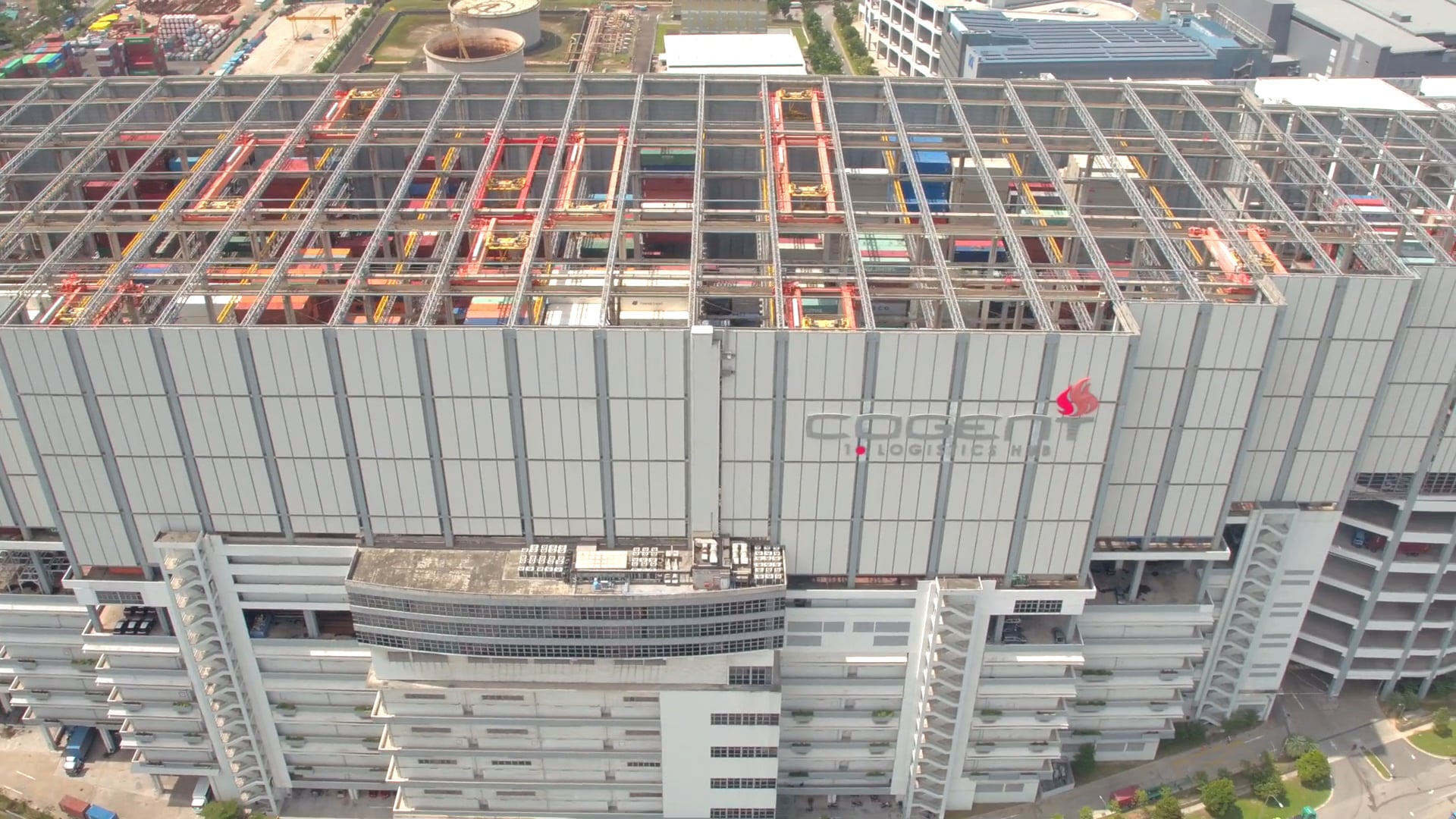
The container depot on the roof
How Konecranes put heavy-duty overhead cranes on top of Cogent's logistics hub — the world's first rooftop container depot.
Cogent's One-Stop Logistics Hub in Jurong ends in a working container depot on its roof — 110 metres up, stacking empties fifteen high, a configuration both companies describe as the world's first. The cranes that make it work are 12-ton container stacking cranes engineered by Konecranes, delivered in the first quarter of 2017 with smart positioning, hoist synchronisation and remote monitoring.
Putting port equipment on a rooftop changes the engineering questions: wind, weight and clearance behave differently at altitude, and a depot above a working warehouse cannot simply stop. Konecranes runs the support from Gul Circle — its Asia-Pacific port services hub, twenty minutes from the site — which by the company’s own account was a deciding factor in the award.
The film follows the depot in operation: the cranes at height, the stacking sequence, and the operator speaking for the project on the record.
- 110 m
- rooftop
- 15-high
- stacking
- 12-ton
- cranes
CLEAN ENERGY · LOGISTICS
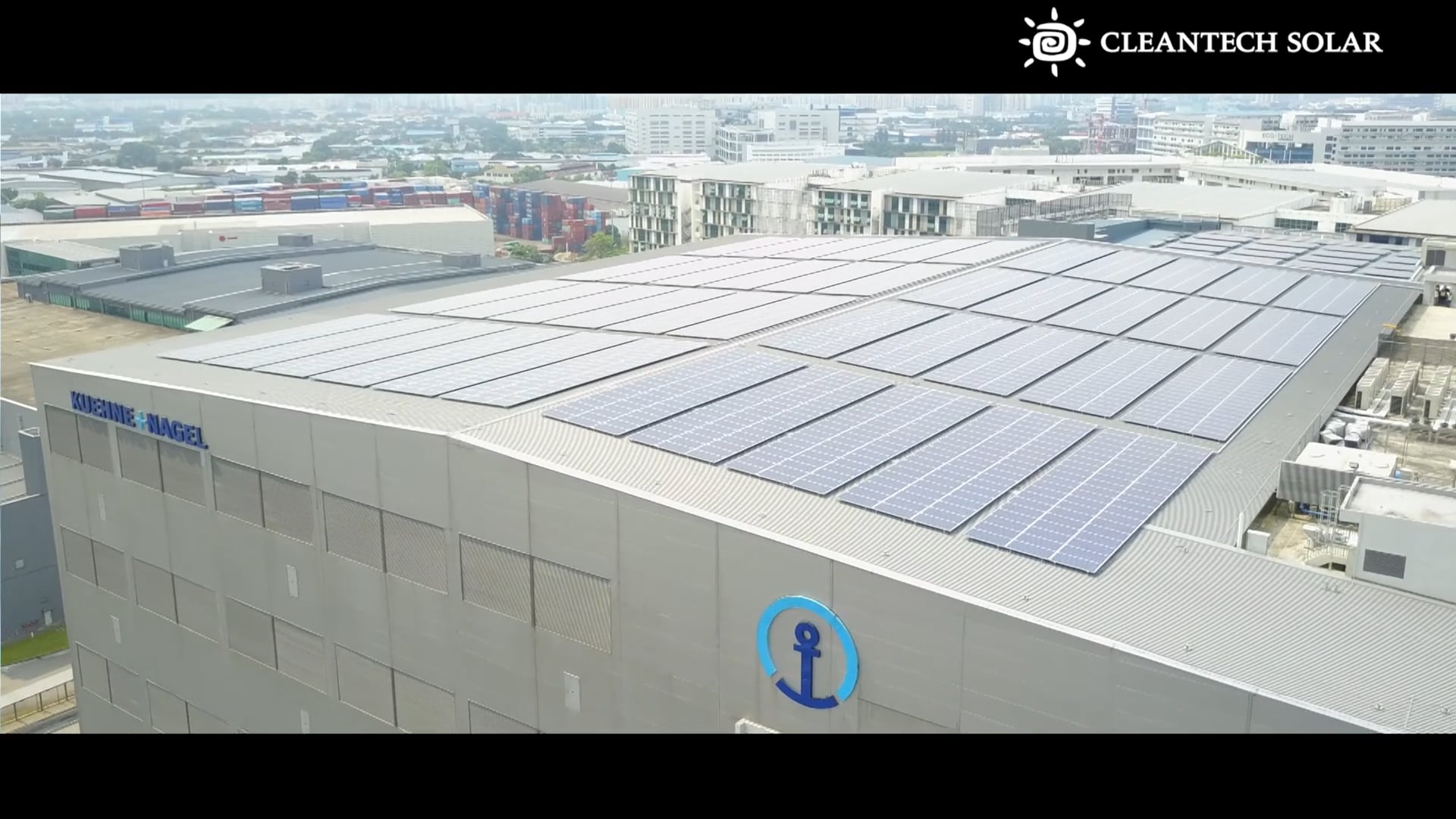
The roof that became a power station
Cleantech Solar turned Kuehne + Nagel's Singapore logistics hub into a one-gigawatt-hour-a-year generator — without the client buying a single panel.
Kuehne + Nagel's Singapore logistics hub carries an 844.8-kilowatt-peak solar array on its roof — generating more than 1,000 megawatt-hours a year, roughly the annual electricity of a small industrial plant, without the logistics group buying a single panel.
That is the structure of the deal, and it is why rooftops like this one are turning into power stations across Asia. Cleantech Solar financed, built, owns and operates the array; Kuehne + Nagel signed a 20-year power purchase agreement and pays only for the energy generated. The capital risk sits with the energy company, the roof does the work, and the logistics group counts the output against its carbon targets.
In the film, it is the client who does the talking: Kuehne + Nagel on what the array delivers, and what it changed.
- 844.8 kWp
- array
- 1,000+ MWh
- a year
- 20-year
- PPA
WHY FILM THE WORK
A tender claim vs a tender film
Every bid says "proven track record". A Project Spotlight is the difference between asserting it and showing it: the site, the kit, the lift, the handover — evidence a procurement panel can watch in three minutes.
The record is read before the phone rings
A Project Spotlight puts the project on the record with the numbers attached — sourced, structured and citable.
The reference check nobody has to phone
In either film the client appears named and on camera, describing the work in their own words. It is a reference on the record, available to anyone who watches.
ANATOMY OF A SPOTLIGHT
Take the Konecranes film apart and five working parts come out.
- The job
- 12-ton container stacking cranes engineered, supplied and supported for the world’s first rooftop container depot.
- The site
- Cogent’s one-stop logistics hub — the depot sits 110 metres above Jurong, stacking containers fifteen high.
- The client on camera
- The operator speaks for the project on the record — the claim is the client’s, not the vendor’s.
- The numbers on the record
- 110 m · 15-high · 12 tons — each figure lives on the company record, traceable to its source.
- Where the film lives
- On this project page, on the company’s record, and on the company’s own channels — it owns the film outright, with perpetual rights.
- Scoped with you, priced per production — a fixed, per-production quote
- Filmed on site, planned around your operations — production doesn’t stop for the camera
- Yours outright, with perpetual rights — run it on any platform you choose
- Goes live on your company’s record, published with the structured data that makes it findable
Finished a project worth filming?
Order a Project SpotlightStarting one?
The best spotlights are filmed while the work happens — talk to us before the crane arrives →